Against a tyrannical lord and his reign of terror in the name of the Emperor, a brave band of rebels arose. Its leader was a mysterious youth, said to be the chosen one named in a prophecy, gifted with the ability to use a mysterious force beyond the reach of ordinary mortals.
Star Wars? Harry Potter? It could be the plot of any number of fantasy stories, but in this case, it happens to be a true episode of Japanese history, the Shimabara Rebellion.
Every rebellion needs its Luke Skywalker, and the one who played that role in Shimabara was one of the most enigmatic figures in Japanese history: Amakusa Shiro.
The Imperial Battle Station
In 1637, the Shimabara domain, just east of Nagasaki, was ruled with an iron fist by Matsukura Katsuie. His father Shigemasa had begun work on a castle large enough to rival the Shogun’s. Naturally, such an ambitious construction project caused some concern in Edo, especially coming as it did after the Warring States period had ended and all Japan was supposedly united under a single ruler. When Tokugawa Hidetada was Shogun, he sent a message to Matsukura: “Please exercise moderation in building your castle. There will be no more wars.”
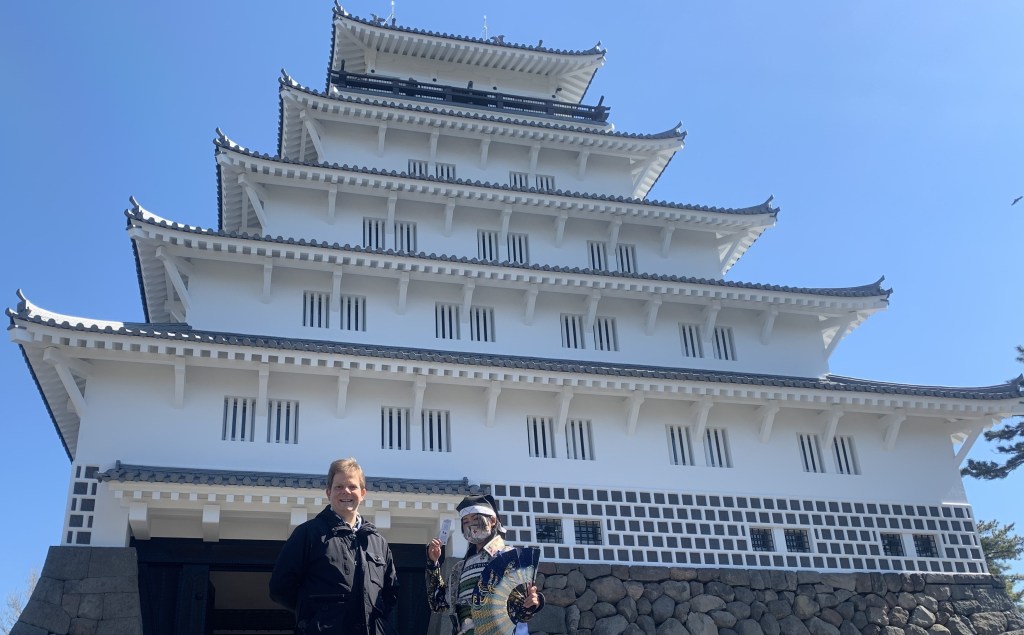
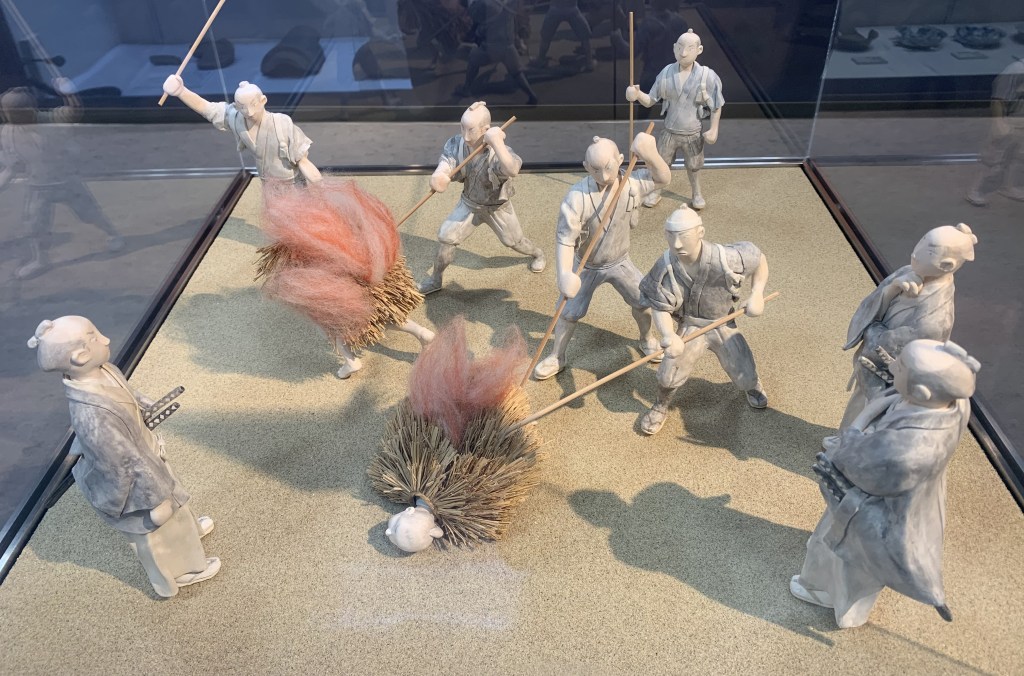
The Shogun’s request went unheeded. The son not only continued the father’s excesses, but took them to the next level. In the midst of a famine, when farmers could scarcely manage to feed their own families, he exacted higher and higher taxes. Those who failed to pay were subjected to sadistic punishments. A favorite was the “raincoat dance.” The victim would be bound hand and foot and dressed in a straw raincoat, which would then be doused with oil and set on fire. Matsukura enjoyed watching the ensuing frantic “dance,” especially when he could boast that the victims had saved the last dances (of their lives) for him.
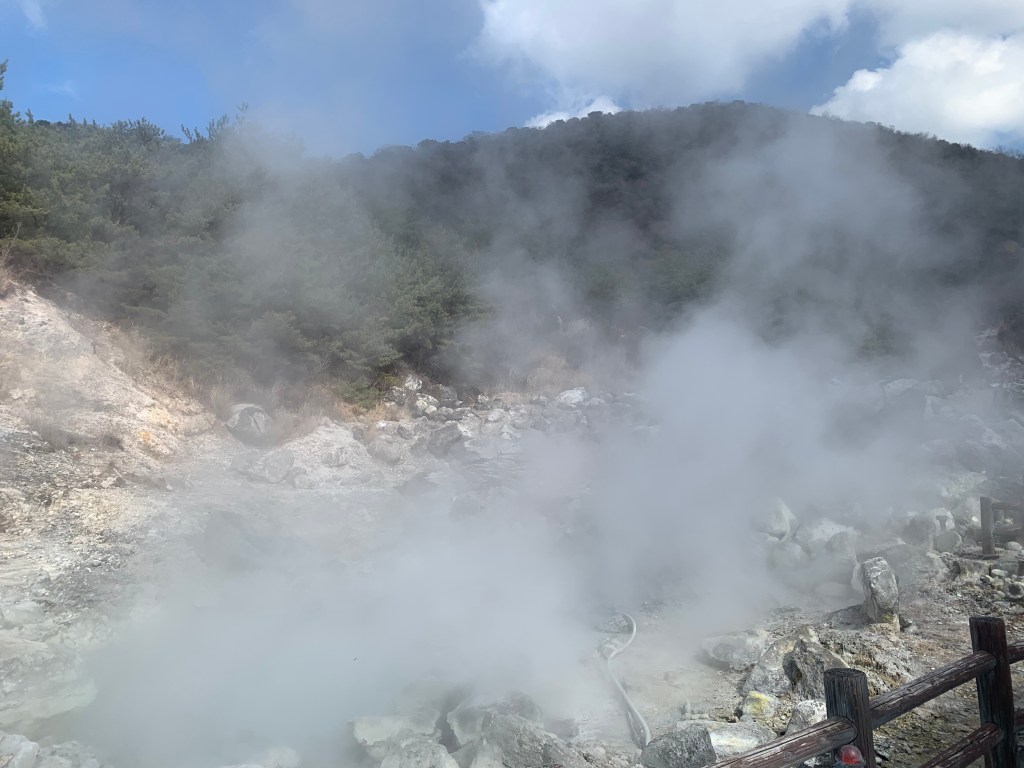
The situation was even more dire for those who were covertly Christian. Nagasaki had once been the headquarters of the Catholic Church in Japan, known as “the Rome of the East.” Japan’s “Christian Century” ended abruptly when the Tokugawa clan took power in Edo. Foreign missionaries were driven out of the country, bounties were placed on the heads of any who secretly stayed, and any Japanese suspected of being clandestine Christians were forced to make a public renunciation of faith (usually by stepping on a cross or icon) or face imprisonment, torture, or death. Matsukura was tasked with enforcing these decrees in his domain, and he took on that duty with relish. Among other things, he took advantage of the boiling hot springs on the active volcano of Mt. Unzen to offer believers a taste of hell on earth.
A New Hope
Just before the expulsion of Catholic clergy from Japan, a figure known as Mamakos the Great (possibly Marco Ferraro, a priest and seminary professor near Nagasaki) supposedly left a prophecy called “the Mirror of the Future.” In it was written:
When five times five years have passed,
Japan will see a remarkable youth,
All-knowing without study.
Behold his sign in the sky:
In East and West the clouds will burn.
Dead trees shall put forth flowers,
And white flags shall flutter on the sea.
Fires shall engulf fields and mountains, grass and trees
To usher in the return of the Anointed One.
The youth in question was the one known today as Amakusa Shiro, who was only 15 or 16 years old at the time of the uprising. He was born in Upper Amakusa to Peter Masuda Jinbei, a Christian samurai formerly in the service of the lord Augustine Konishi Yukinaga, and his wife Martha. Supposedly, as the prophecy had foretold, he had knowledge beyond the education his parents could have been expected to provide. By the age of four, he could already read and write, and was said to have a comprehensive knowledge of the Bible even though only small portions had ever been translated into Japanese, and most remaining copies of those had been destroyed. Even more remarkable abilities have been ascribed to him, such as walking on water, lighting fires without tools, making dolls walk, or making a bird perch in his hand and lay an egg containing a Bible verse. And whether or not he actually possessed divine powers, most sources agree that he had an angel’s face.
The Rebellion
As Matsukura tightened his grip, demanding ever-higher taxes and threatening ever-harsher punishments, the people’s desperation and anger reached a boiling point. The domain contained several ronin (former samurai) who had fought against the ruling Tokugawa clan in the battle for rulership of Japan in 1600, and were more than willing to strap on their antique armor for one last campaign. Thus began the Shimabara Rebellion (more properly known as the Shimabara-Amakusa Uprising), and its most recognizable face and eloquent voice belonged to Amakusa Shiro.
As Shiro led the march toward Shimabara Castle, he left ghost towns in his wake as entire villages dropped everything to follow him. His forces swelled until they numbered more than 30,000, including seasoned veterans, expert marksmen, and at least one gunsmith. Any of Matsukura’s soldiers who met them expecting a mob of untrained farmers armed only with rakes and hoes would be making the greatest, and probably last, mistake of their lives.
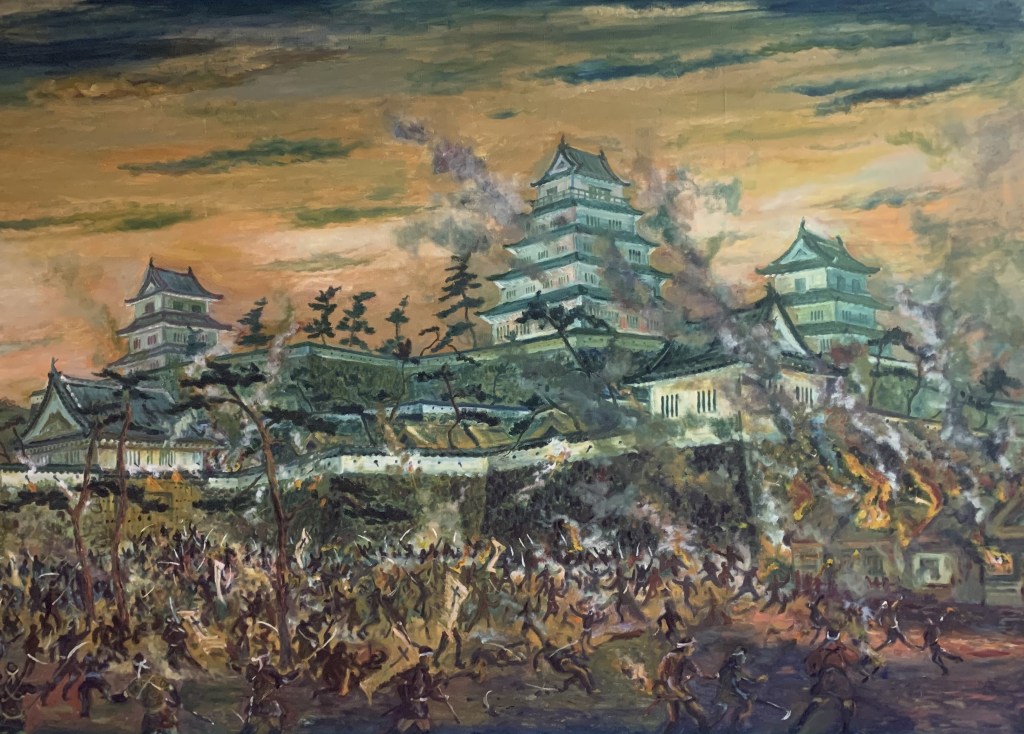
After numerous skirmishes with Matsukura’s forces, Shiro ultimately established his rebel base at Hara Castle, which the elder Matsukura had abandoned to build his new castle in Shimabara. By then, the rebellion had caught the attention of the Shogun, who sent a force numbering over 200,000 to quell it. The soldiers came not only from Shimabara and other domains all over Kyushu but from as far away as the Fukuyama Domain in present-day Hiroshima Prefecture. The Shogun clearly saw the rebels as a force to be reckoned with.

The Shogunate had the advantage of numbers, but Shiro could well have said, “Judge us by our size, do you?” He fought in the firm conviction that Heaven was on his side. And while some of his followers might have believed more strongly in Heaven than others, one thing they could all agree on was that under Matsukura, they had already served their time in Hell.
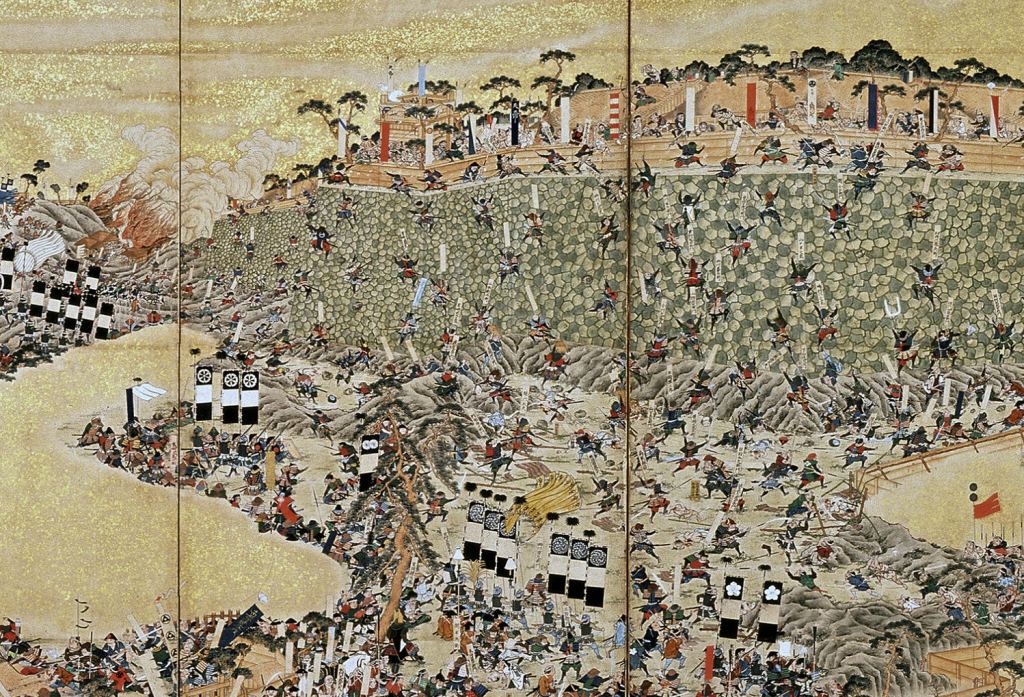
The Fandom
Now, nearly four hundred years later, Amakusa Shiro is a local legend in Shimabara and Amakusa. While I have yet to see any Amakusa Shiro action figures or Hara Castle LEGO sets, statues of him can be found in museums and castles all over the region.
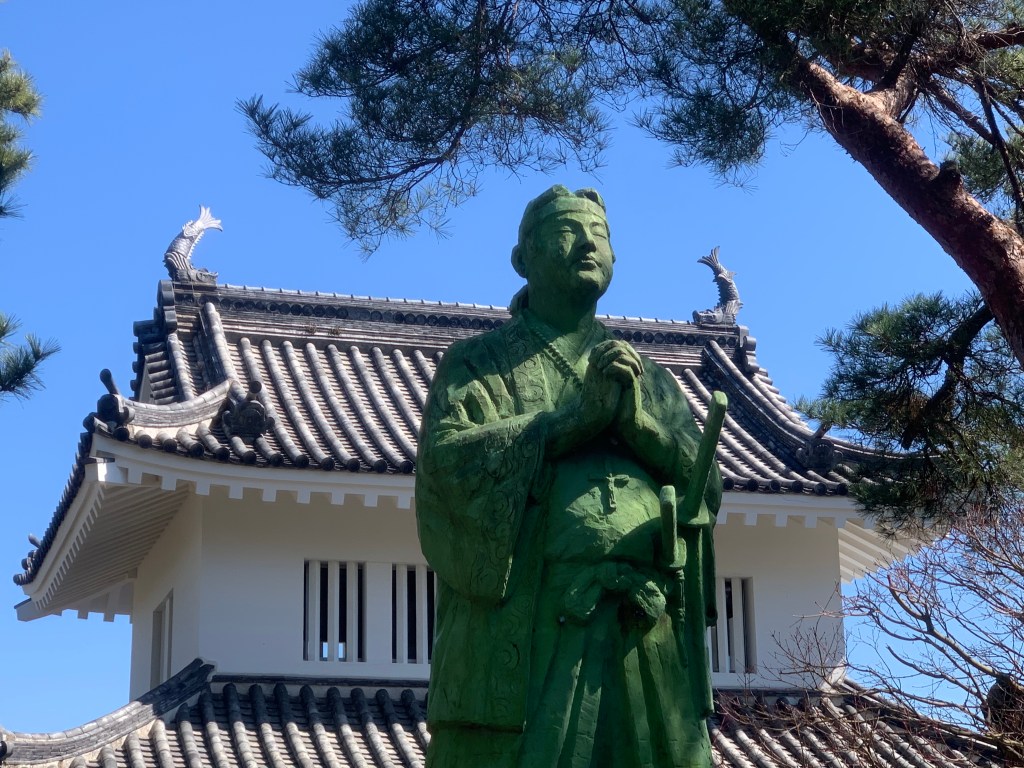
Shiro’s story has been retold in books, movies, and even video games (he appears as a character in SAMURAI SHOWDOWN). If you visit Shimabara Castle, you have only to pray pay, and he will descend from heaven (well, virtually) and personally guide you around the exhibits.
His hometown of Upper Amakusa has paid him the highest honor a Japanese town can confer: making him into a mascot.

Upper Amakusa also has a memorial to him, shaped like a church. The first floor is a museum, and the second floor consists of a “meditation chamber” where visitors can relax in beanbag chairs by the soft light of illuminated globes, with images of Shiro projected onto a screen and New Age music playing in the background. I couldn’t take photos inside, but I did take advantage of the opportunity to rest a while and commune with the spirit of Shiro:

“Who are you, Amakusa Shiro?”
“Who do people say that I am?”
“Some say you’re a heroic freedom fighter. Some say you’re a naïve pawn of the ronin who were the real leaders of the rebellion. Others, that you’re the leader of a fanatical cult. And still others, that you’re the Japanese reincarnation of Jesus Christ.”
“But who do you say that I am?”
 Simon Grey